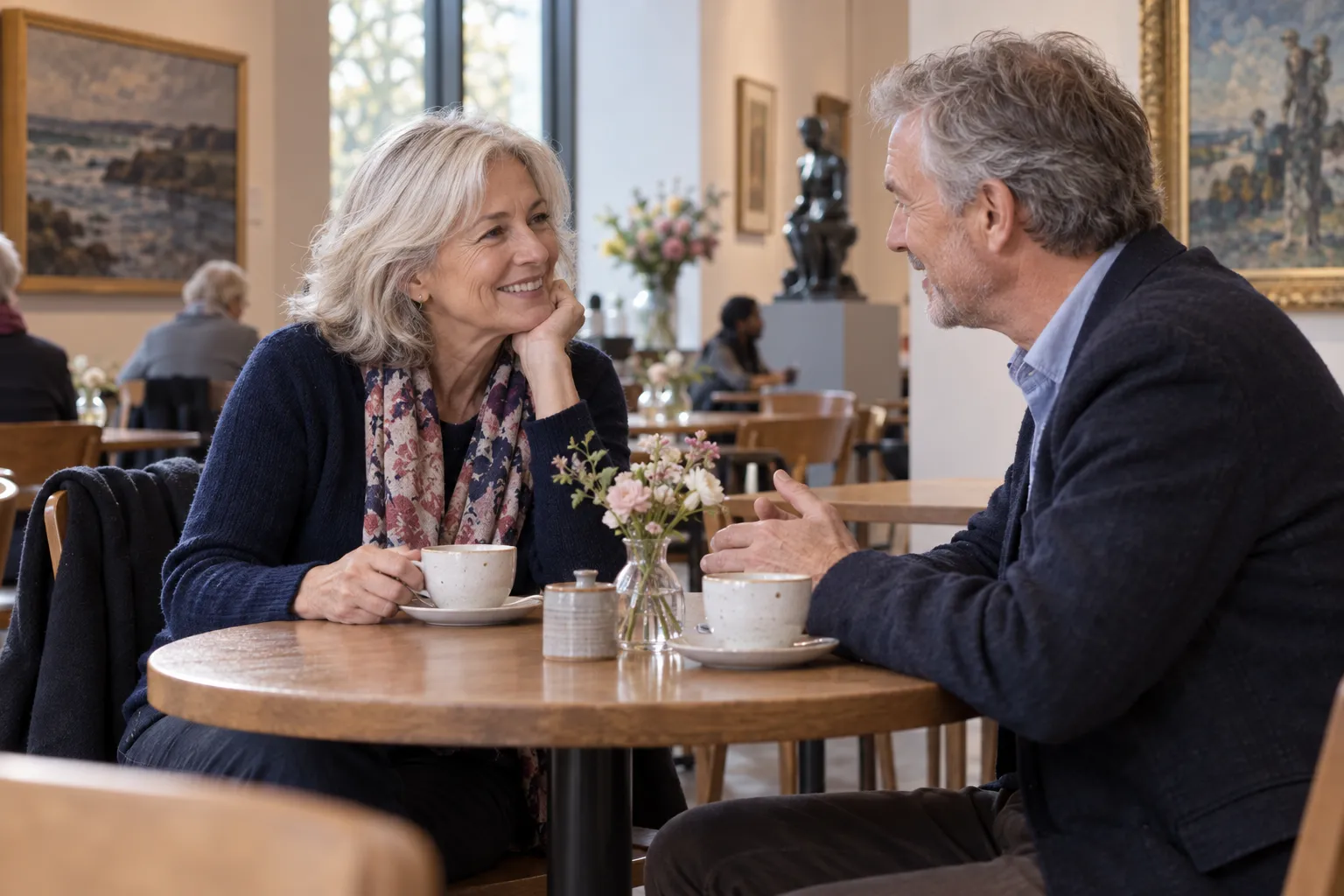
The best first-date idea is not the most impressive one. It is the plan that lets two people hear each other, arrive without a complicated journey, spend an amount both understand and leave comfortably if the connection is not there.
That turns choosing a date into a practical decision rather than a search for novelty.
Use six checks before choosing the place
Ask these questions together:
- Can we both reach it easily? Consider the whole journey home, not only the outward trip.
- Can we talk at a normal volume? Music, hard surfaces and peak-time crowds can make a stylish venue a poor conversation space.
- Is the likely cost clear and comfortable? Nobody should have to reveal a budget by rejecting an unexpectedly expensive suggestion.
- Can the date end after about an hour? A first meeting needs a natural exit.
- Could it continue if we both want it to? A nearby walk, second drink or extra exhibition room provides an easy extension.
- Does the place work for our access needs? Step-free routes, seating, toilets, lighting, hearing support and walking distance matter differently to different people.
If a plan fails several of these checks, change the plan rather than hoping chemistry will compensate.
Conversation-first formats
Coffee with an optional short walk
Why it works: The initial commitment is small, the cost is visible and a nearby walk gives the conversation a second setting if both people are comfortable.
A poor choice when: The café is routinely crowded, the only seating is on stools, or the walk is treated as compulsory despite weather, fatigue or mobility needs.
Make it practical: Name the café rather than “somewhere in town”, check its closing time on the day and identify a nearby public route with places to sit. Agree that coffee alone is a complete date.
A quiet weekday lunch
Why it works: Daylight and table service can make conversation comfortable, especially if standing in a queue is difficult. A limited lunch menu also makes cost easier to judge.
A poor choice when: “Lunch” actually means a formal multi-course restaurant or the venue becomes loud and rushed at midday.
Make it practical: Share the menu in advance, mention how you prefer to handle the bill, and book only for the time you need. Either person can offer to pay; neither should assume that paying creates an obligation.
A bookshop followed by coffee
Why it works: Browsing provides ready-made conversation without demanding a specialist interest. It also allows brief quiet pauses that do not feel like failed conversation.
A poor choice when: One person dislikes browsing, the shop has narrow or inaccessible floors, or you plan to spend the date reading separately.
Make it practical: Meet at the entrance, choose one or two sections, and move to a seated café while there is still plenty to discuss.
Formats with something to notice together
A gallery or small museum
Why it works: You can talk about what is in front of you instead of exchanging a sequence of interview questions. Free collections also allow a short visit without wasting an expensive ticket.
A poor choice when: It is a major exhibition at its busiest time, either person feels obliged to know about art, or the building offers nowhere to sit.
Make it practical: Pick one gallery or floor rather than the entire building. Check ticketing, cloakroom rules, lift access and seating on the venue’s own site, then choose a nearby café as an optional next step.
A garden, park or riverside route
Why it works: Walking side by side can feel less intense than sitting face to face, and changing surroundings supply natural conversation prompts.
A poor choice when: The route is isolated, uneven, poorly lit, weather-dependent without a backup, or longer than either person wants.
Make it practical: State the distance and surface, choose a busy daytime route, check the forecast and identify a public indoor alternative. In our city guides, places such as the canal-side centre of Birmingham, Liverpool’s waterfront and central Glasgow are considered with transport and nearby alternatives—not recommended as vague meeting points.
A garden or heritage property
Why it works: There is gentle structure, usually a café, and enough to see without having to manufacture constant conversation.
A poor choice when: Entry, parking or food makes it more expensive than expected; the site is mostly outdoors in poor weather; or distances between facilities are substantial.
Make it practical: Check the exact property’s current access and visitor information. The National Trust explains its accessibility information, but facilities differ by place—never assume that a historic setting is fully step-free or that mobility equipment is available without booking.
A covered market at a quiet time
Why it works: Separate stalls create small choices and talking points, while each person can control what they spend.
A poor choice when: Narrow aisles, strong smells, crowds or high background noise make it uncomfortable. Weekend lunch peaks are often a different experience from a weekday morning.
Make it practical: Choose a meeting entrance, a quieter time and a seated stop. Do not turn tasting or buying food into a challenge the other person must join.
A daytime cultural event
Why it works: A short talk, matinee performance or local-history session gives the date a shared focus and a defined finish.
A poor choice when: The event takes up the whole meeting, prevents conversation, or cannot be left without disruption.
Make it practical: Prefer a short event with time for tea afterwards. Share the subject, running time, ticket price and refund conditions before booking.
Accessibility belongs in the first plan
Do not guess what another adult needs and do not make them justify it. Ask a neutral question: “Is there anything that would make the venue or journey work better for you?” Then check the details that matter to that person.
AccessAble publishes detailed access guides for many UK venues. Venue websites may also list entrances, lifts, accessible toilets, seating, hearing loops, lighting or sensory information. Check the date of any guide and contact the venue when a crucial detail is unclear.
For rail journeys, National Rail’s Passenger Assist can arrange assistance across an entire journey, including multiple services. It also advises that passengers can turn up and request help, although assistance may take longer. Confirm the current arrangements for your own route rather than making the date responsible for transport support.
Choices that often add pressure
Some familiar first dates make conversation harder or the exit more awkward.
- Alcohol-led plans: One drink may suit both people, but a bar should not make drinking the price of participating. Offer an alcohol-free setting or a venue with good non-alcoholic choices, and keep control of your own drink and journey.
- An expensive restaurant: Cost, etiquette and a long booking can dominate a meeting that has not yet earned that investment. Save it for when you know each other’s preferences.
- The cinema: Sitting together for two hours reveals little if there is no time to talk. A film can work later, or as part of a plan with a conversation afterwards.
- A long activity: A full-day walk, excursion, class or match can trap both people in a plan after the connection has faded. Shorten the first version.
- Either person’s home: A private address removes the neutral exit and reveals personal information too early. Meet publicly until trust has developed.
Plan the end before the date starts
Agree roughly how long you have and arrange independent transport. Police Scotland’s online dating guidance recommends care with personal information and meeting in a public place. Tell someone you trust where you are going, and use our detailed safety guide for the rest of the practical precautions.
If there is no chemistry, you do not need to prolong the date to prove kindness. Thank the person for meeting, settle your part of any bill and leave as planned. A later message can be brief and clear: “Thank you for today. I enjoyed meeting you, but I did not feel the connection I am looking for. I wish you well.”
If the conversation is easy, suggest the pre-planned extension rather than quietly turning an hour into an open-ended day. The other person can accept or decline without having to invent an excuse.
That is the real purpose of a good first-date idea: not to guarantee attraction, but to make either outcome—another date or a courteous goodbye—easy to handle. Browse the UK city dating guides for researched local options, or see how Fifty Flirt works before starting a conversation.