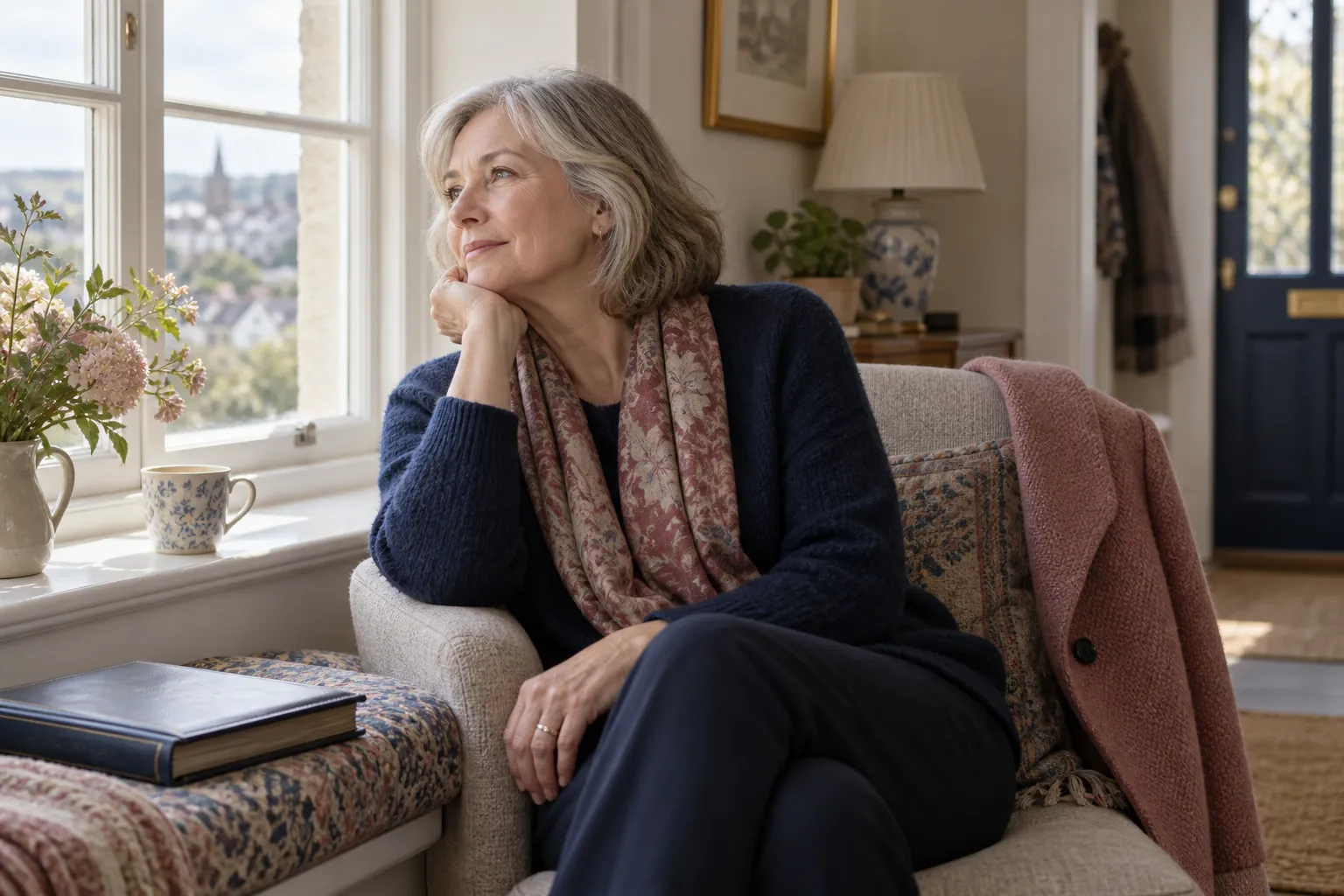
Meeting someone after the death of a partner is not a stage that everybody must reach. It is not proof that grief is finished, and choosing not to date is not evidence that life has stopped.
If companionship, affection or curiosity begins to feel possible, you are allowed to explore it without declaring that the person who died has been replaced. You are also allowed to try once and decide that you do not want to continue.
There is no correct timetable—and no requirement to date
Cruse Bereavement Support says there is no right or wrong time to consider a new relationship, and that some people will not want one. Sue Ryder’s guidance on reconnecting after a partner’s death likewise emphasises that there is no single right way or time.
Neither message offers a hidden test. Months or years cannot decide for you, and neither can a friend’s approval, an anniversary or what another bereaved person chose.
More useful questions are:
- Am I curious about meeting a person, not only trying to make a particular evening less painful?
- Could I tolerate a disappointing date without reading it as a message about my whole future?
- Can I speak about my partner without feeling that a date must avoid the subject or become my main source of support?
- Do I have enough control over the pace to stop if this feels wrong?
- What do I want now: occasional company, physical affection, regular dates or the possibility of commitment?
You do not need a confident answer to every question. They are prompts for making a manageable first choice, not a diagnosis of readiness.
Wanting company is not replacing somebody
A new person does not take over the history, role or memories of the partner who died. They arrive in a life that already contains love, loss, routines and relationships.
It may help to replace the idea of “moving on” with something more precise: meeting one person for coffee; joining an online service; accepting an invitation; or noticing that you would enjoy sharing an ordinary Sunday. Each is reversible. None rewrites the past.
Companionship can also be only companionship. Do not promise a lasting relationship because you feel you should make the decision meaningful. Be as clear as you can about what you are open to, and allow that answer to change.
Guilt and enjoyment can arrive together
The NHS guide to grief explains that grief affects people differently and can include guilt, sadness and anger, while powerful feelings may appear unexpectedly. Enjoying a conversation may therefore sit beside guilt or renewed sadness. One feeling does not cancel the other.
When guilt appears, make the next decision smaller. You might finish the date rather than planning another immediately, write down what felt comfortable and uncomfortable, or talk to somebody who knows your history without asking them to decide for you.
Avoid treating either enjoyment or distress as a final answer. A pleasant date is not a commitment to continue. A difficult afternoon does not mean you can never try again.
Decide when and how to tell a date
You do not owe strangers the full circumstances of your partner’s death. You do owe a prospective partner enough truth to understand an important part of your present life.
Online, “widowed” may be all you want to put on a profile. In conversation, a simple version can be enough:
My partner died three years ago. They remain an important part of my life, and I am now open to getting to know somebody new at a steady pace.
This is an illustrative example, not a real Fifty Flirt member. There is no need to include a cause of death, medical details or family information unless you choose to share them.
A considerate date may ask questions and may also be unsure what is appropriate. You can guide the conversation: “I am happy to talk about them, but I would rather not discuss the final illness today,” or “It is part of my life, though I would like us to spend time getting to know each other too.”
For help writing the rest of your profile around your current routines and intentions, use the dating-profile guide.
Photos, memories and continuing bonds
Dating does not require removing photographs, changing traditions or avoiding your partner’s name. Cruse notes that a person who died remains part of your life and that a new relationship can exist alongside those memories.
The practical issue is not whether memories exist, but whether both people can speak about their place in the present. If photographs are displayed throughout your home, anniversaries affect your plans, or regular visits to a meaningful place matter to you, explain this as trust develops. A new partner can then respond honestly rather than discovering an unspoken rule.
That new person should not be asked to compete with somebody who cannot be present, and you should not be asked to erase your history to make the relationship easier. Compatibility includes whether both people can live with that complexity respectfully.
Family reactions may carry their own grief
Children, grandchildren, siblings and friends may welcome the thought of you having company. They may also feel protective, surprised, disloyal to the person who died, or worried that family memories will change. Their reaction can reflect their loss as well as their view of your decision.
You can hear those feelings without granting a family vote. Start with information: “I have begun talking to people online,” or “I am going for coffee with someone.” There is rarely a need for an early introduction.
If a connection becomes established, discuss introductions rather than announcing them at a significant family gathering. Listen to specific concerns about pressure, secrecy, money or changed behaviour. Those deserve attention. A general demand that you never date is a different matter and may need a kind boundary.
Expect grief to resurface without treating it as failure
A venue, song, first holiday, anniversary or moment of affection may bring grief sharply into the day. The NHS notes that powerful feelings can appear unexpectedly. This does not by itself tell you to continue or stop dating.
Have a simple response available:
- name what is happening if you can: “This place has brought back a strong memory”;
- change or shorten the plan without apologising for the existence of grief;
- contact a trusted friend, relative or support service rather than expecting a new date to hold every difficult feeling;
- decide about another date later, when the immediate intensity has passed.
A prospective partner does not need perfect words. They do need to respect a boundary, avoid jealousy towards your memories and accept that grief may sometimes alter a plan.
Trying and stopping are both valid choices
You may create a profile and leave it hidden. You may exchange messages and decide not to meet. You may enjoy one date and decline a second. You may stop for months, or decide that a new relationship is not what you want.
If you use online dating, keep the practical steps small: share only the personal information needed for the conversation, use the site’s messaging at first and choose a short public meeting. Our guide to online dating after 50 covers that process, while the safety guide deals with privacy, money requests and meeting precautions.
When more support would be useful
Dating advice is not grief support. If grief is making daily life hard or you are worried about how you are coping, the NHS page lists ways to seek help, including bereavement support and NHS talking therapies. Cruse also provides bereavement support across the UK.
Support does not have to produce a decision about dating. It can simply give difficult feelings somewhere appropriate to go, so a new conversation is not required to carry them all.
If meeting somebody begins to feel like a choice you want—not a task you owe anybody—our guide to dating after 50 can help you define your pace and intentions. You can also see how Fifty Flirt works without committing to start.